.png)

DAY TWO

Workshop
RISING SEAS, RISING QUESTIONS:
Legal Responses to Climate Migration in Practice
10:00 - 13:00 Room 25 Teaching Hub
The simulation workshop “Rising Seas, Rising Questions: Legal Responses to Climate Migration in Practice” is a formative activity aimed at university students and young people interested in climate change, international law, and forced migration.
The goal is to to develop practical negotiation skills and a critical understanding of the challenges related to climate migration.
The workshop is structured in two main parts, a theoretical introduction with a negotiation simulation, with the goal of providing participants with a concrete understanding of the legal, political, and social challenges related to climate-induced migration
.png)
Ludovica D’Apote
PhD Student in International Law, Ethics and Economics for Sustainable Development at the Università degli Studi di Milano. She is currently a visiting PhD student at the Max Planck Institute for Comparative Public Law and International Law.
She completed an internshipat the Territorial Commission for the Recognition of International Protection and undertook a visiting research period at IREDIES (Institut de recherche en droit international et européen de la Sorbonne).
Federica Merenda
Researcher in political philosophy at the Sant'Anna School of Advanced Studies. She also holds the position of expert consultant in "Ethics and human rights in artificial intelligence" at the Presidency of the Italian Council - Department for Digital Transformation and is also the scientific manager of the "Easy to tech" project at the COTEC foundation.
.png)
Conference
THE VOICE OF NATURE:
Insights on its Legal Subjectivity and Ecocide
17:00 - 19:00 Room 12 Teaching Hub
The conference will explore the most recent developments in environmental criminal law. The event will be structured into different thematic sessions.
It opens with a comprehensive legal and technical overview of environmental law, examining its judicial evolution and the growing recognition of Nature as a subject of law, supported by key legislative milestones that grant ecosystems legal standing.
It then focuses on the concept of ecocide, addressing the legal and criminological challenges of prosecuting large-scale environmental destruction.
The event concludes with an in-depth analysis of the Los Cedros case, a landmark example of the Rights of Nature in practice, highlighting how constitutional protections were applied to safeguard a forest ecosystem by recognizing its intrinsic right to exist and regenerate.
.png)
Silvia Bagni
Associate Professor in Comparative Public Law at the University of Bologna, her research interests include constitutional justice, Latin American constitutionalism, interculturalism, and ecological law. She is also professor of the PhD Programme in Constitutional and International Law at the Universidad San Carlos in Guatemala and in the PhD Programme in Law at the University of Cádiz in Spain.
She works for a new paradigm for the recognition of Nature as a legal subject and integrates within her studies intercultural and interdisciplinary aspects in order to provide a comparative approach in her analysis.
Roxane Chaplain
Roxane Chaplain is an environmental lawyer. She worked over four years at the European Parliament negotiating EU environmental legislation (access to justice in environmental matters, environmental crime, corporate liability, protection of environmental defenders, etc.) as a parliamentary assistant to Marie Toussaint.
Alongside this, she has always been involved in the climate justice movement, working with NGOs such as Notre affaire à tous or ClientEarth. She is also working on creating training programmes for the judiciary in environmental law, particularly in environmental criminal law.
.png)
.png)
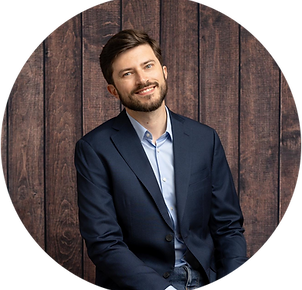
Ramiro Ávila Santamaría
Ramiro Ávila Santamaría is an Ecuadorian lawyer and expert in human rights and the rights of nature. From 2019 to 2022, he served as one of the nine judges of the Constitutional Court of Ecuador, which played a key role in enshrining the rights of nature in Ecuadorian society.
He holds a PhD in Legal Sociology from the University of the Basque Country, an LL.M. from Columbia University (New York), and a Master’s degree in Legal Sociology from the University of the Basque Country–International Institute of Legal Sociology (Oñati). He graduated in Legal Sciences from the Pontificia Universidad Católica del Ecuador (PUCE).
He is currently Professor
of Law at the Universidad Andina Simón Bolívar (Ecuador), where he directs the Law Area and coordinates the international Master’s Degree in Law Research.