.png)
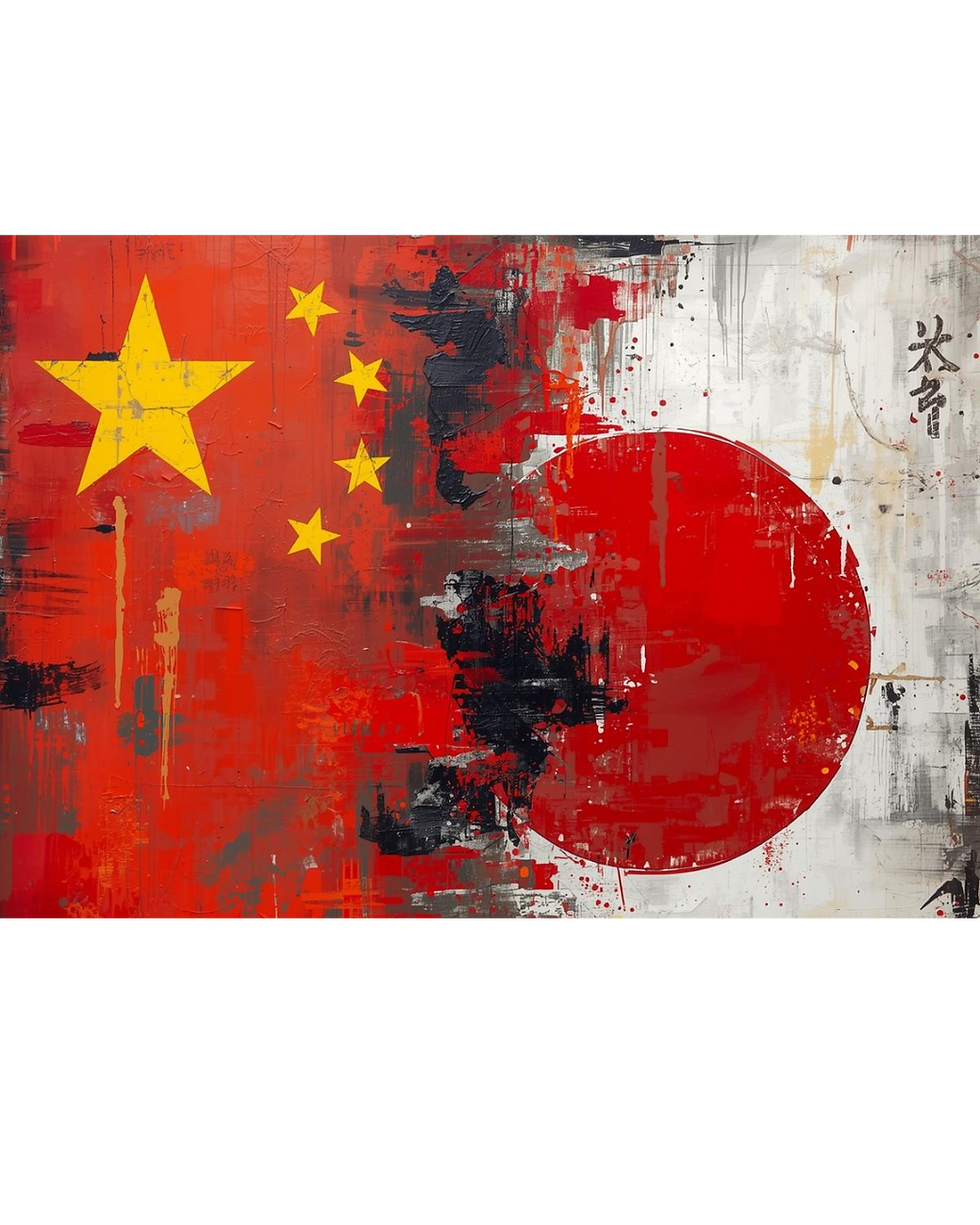
Japan-China Diplomatic Chaos
CAMILLA BIANCHEDI
28/01/2026
On November 7, 2025, Japanese Prime Minister Sanae Takaichi informed the Diet that a Chinese use of armed force against Taiwan could constitute a “survival-threatening situation” for Japan, thereby justifying a defensive military mobilization. The statement marked a departure from Japan’s long-standing strategic ambiguity and triggered a series of political, diplomatic, and economic repercussions.
On November 7, 2025, just over a month after the elections that brought her to power, Japanese Prime Minister Sanae Takaichi triggered a crisis between Japan and China. On that day, she informed the Diet (the Japanese parliament) that if China were to use armed force against Taiwan, it could constitute a “survival-threatening situation” for Japan, thereby justifying a military defensive mobilization in response. This statement breached Japan’s long-lasting ambiguity on the issue and set in motion a series of political, diplomatic, and economic consequences.
The situation could constitute a significant turning point in the international relations between two of the most influential Asian countries.
The evolution of the Self-Defence Forces
Following the end of World War II, Japan was never supposed to be an aggressive and militarized state. Article 9 of the Japanese Constitution (1947) proclaimed Japan’s pacifism, its renunciation of war and the use of force as a means of settling international disputes. However, things slowly changed over time, mostly because of the U.S.'s strategic needs during the Cold War and the security threats the region posed to the country.
In 1954, the Japanese established the Self-Defence Forces (SDF). Although formally constrained by constitutional pacifism, the SDF became the building block of Japan’s national defence system. Over time, successive governments allowed a gradual reinterpretation of Article 9’s “war renunciation” clause, expanding these forces’ role and their capabilities. This process culminated in the 2015 reform package known as the Legislation for Peace and Security. This reform significantly altered one of the three conditions for the legitimate use of force, originally set in 2003. For the first time, it allowed the use of military force in response to an “attack against a country that has a close relationship with Japan and, as a result, threatens Japan’s survival”, the so-called right of “collective self-defence”. In subsequent defence policy documents, this scenario has been legally defined as a “survival-threatening situation,” the same terminology employed by Prime Minister Takaichi in her speech to the Diet.
For Japan and its Prime Minister, the proximity of Taiwan, the presence of the US military on Japanese soil, and the instability that would arise from a Chinese attack or blockade of the Taiwanese people, is something that would need a strong response. Nevertheless, such clarity of Japan’s position on the Taiwan situation has never been spoken before by the country’s highest political authority. Under Takaichi’s words, an attack on Taiwan is now openly regarded as an economic, maritime, and security threat to Japan: Tokyo will no longer tolerate actions that could potentially ignite a general destabilization of the region.
The End of Japanese Strategic Ambiguity
The Prime Minister Takaichi belongs to the same political party as her mentor and role model, Shinzo Abe. This is the Liberal Democratic Party (LDP), a central right conservative party that has consistently viewed the U.S.–Japan alliance as essential, promoted a more active regional role for Japan, and brought the 2015 reform. Yet even Abe never explicitly committed Japan to the defence of Taiwan, trying to avoid meddling in tense disputes with strategic partners like China.
Japan’s ambiguity on this issue was part of a broader strategy aimed at preserving strong relations with both the United States and China to safeguard its economic, diplomatic, and security interests: an approach commonly referred to as hedging strategy. This strategy is frequently applied to ASEAN countries and described as a “mixed and opposite positioning, which exhibits elements of both power-acceptance and power-rejection” to mitigate risks and maximize rewards in relations with competing great powers.
Japan has long relied on strategic ambiguity to navigate the U.S.–China rivalry, remaining a close ally of the United States while simultaneously benefiting from strong economic ties with China. A notable example dates to 1972, when Japan and China signed a Joint Communiqué in which Tokyo acknowledged and respected Beijing’s “One China” position, while deliberately leaving Taiwan’s international status unresolved.
From Takaichi’s political perspective, the breach of this ambiguity made sense because it is in her identity and hard-line security posture that brought her to power. However, the absence of immediate and unequivocal U.S. support, coupled with President Trump’s recommendation to avoid further provoking Beijing, reinforced perceptions that the Taiwan issue may no longer rank among the top priorities of the Trump administration and therefore find U.S. support.
The Chinese Response
On November 8, the first harsh response came from the PRC’s consul general in Osaka, Xue Jian, who posted on the social media platform “X” that “the dirty neck that sticks itself in must be cut off”, referring directly to the Japanese Prime Minister. Although the post was later deleted, the overall Chinese reaction continued to be severe and ruthless, and directed against Takaichi.
Beijing framed its reaction around the principles of non-interference and the defence of what it considers its core interests, arguing that Takaichi’s statement constituted an unacceptable challenge to Chinese sovereignty. Beyond rhetorical condemnation by the Chinese Communist Party (CCP) officials, China also adopted concrete economic countermeasures against Japan.
On November 14, the PRC restricted tourism to Japan, issuing an advisory against travel to Japan by saying that it was a dangerous country for Chinese citizens. Five days later, Beijing announced a ban on Japanese seafood imports and imposed restrictions on cultural exchanges. On January 6, China further escalated its response by introducing new export controls on dual-use technologies, including rare materials, permanent magnets, and other critical minerals required for advanced defence production.
By introducing commercial restrictions, the two governments appear to be inclined to a new form of indirect delegitimation of the opponent: bans on the import-export sector directly influence the consumers’ perception of the other country, resulting in a general sense of mistrust of international cooperation.
In addition, on December 29 and 30, China conducted large-scale military drills around Taiwan, the Justice Mission 2025. This exercise simulated a blockade of Taiwan and its major ports, including Keelung and Kaohsiung, and demonstrated Chinese force and strategy. It involved 89 military aircraft and 28 naval and coast guard vessels. This represented the largest war game since China’s 2022 response to the then U.S. House Speaker Nancy Pelosi’s visit to the island, in terms of the area covered. While the drills followed a major U.S. arms sale to Taipei and reflected a broader trend of increasingly frequent Chinese military activities, they were also widely interpreted as a direct response to Takaichi’s remarks.
Political Fallout in Japan
Despite mounting economic pressure and diplomatic tensions, Prime Minister Takaichi did not withdraw her statement, nor did the Chinese economic retaliation stop. At the domestic level, however, public support for Takaichi remained resilient: some analysts argue that Japanese citizens want to rely on their new elected government, conceding it some margin of growth. Capitalizing on this momentum, she dissolved the Diet on Friday, January 22, paving the way for early elections scheduled for February 8, to transform popular backing into a decisive majority in the lower house.
As a conclusion, Takaichi intends to crystallize her consensus by giving evidence of her government’s effectiveness, and these elections will show how to achieve this goal at an international level.
Will Japan be able to channel its discipline into a credible and durable international posture?
Bibliography:
Hoffman, A. F. (2025, December 15). Analysis | Takaichi’s “survival-threatening situation”: Is Taiwan a legal tripwire? The Diplomatic Pouch. Medium.
McCurry, J., & Davidson, H. (2025, November 17). China and Japan are in a war of words over Taiwan — what happens next. The Guardian.
The Guardian. (2025, November 27). Donald Trump, Japan’s PM Sanae Takaichi and China dispute. The Guardian.
Global Taiwan Institute. (2025, December). The PRC’s diplomatic offensive against Japan over Taiwan. Global Taiwan Institute.
Baskaran, G., & Schwartz, M. (2026, January 13). China’s rare earth campaign against Japan. Center for Strategic and International Studies (CSIS).
BBC News. (2026, January 19). Japan PM Takaichi calls snap election three months after taking office. BBC.
Al Jazeera. (2025, December 30). How are China’s new war games around Taiwan different from earlier drills? Al Jazeera.
BBC News. (2025, December). China holds military drills around Taiwan as warning to ‘separatist forces’. BBC.
Photo from Canva Pro
Articoli Correlati
Lo scontro Cina-Taiwan: un guaio per l'Occidente e non solo

Bentrovato Presidente
Security and Defence Partnership: un’intesa vincente tra UE e Giappone?
